A Higher Skills Ambition for Northern Ireland: New research sets out the skills outlook to 2035
Open College Network Northern Ireland (OCN NI), in partnership with the Learning and Work Institute, has published a major new piece of research exploring the future of skills across Northern Ireland and the challenges and opportunities that lie ahead.
This evidence-based report provides a comprehensive analysis of the region’s current skills profile and projects how qualifications and workforce capabilities could evolve through to 2035. It highlights both the progress already made and the scale of ambition needed to ensure Northern Ireland’s economy remains competitive, inclusive and resilient.
Skills are central to Northern Ireland’s long-term prosperity. They underpin productivity, employment, social inclusion and community wellbeing. As the report makes clear, learning and skills are not only economic drivers but also key to social justice and equality of opportunity.
Stephen Evans, Chief Executive of the Learning and Work Institute, said:
“Skills are an engine of growth and driver of social justice. It is therefore heartening that an increasing proportion of people in Northern Ireland are projected to benefit from higher qualifications by 2035. However, our findings also suggest that Northern Ireland remains likely to have one of the highest proportions of low-qualified people in the OECD. We must adopt a higher ambition here: closing inequalities in skills can build a fairer, more prosperous and inclusive Northern Ireland.”
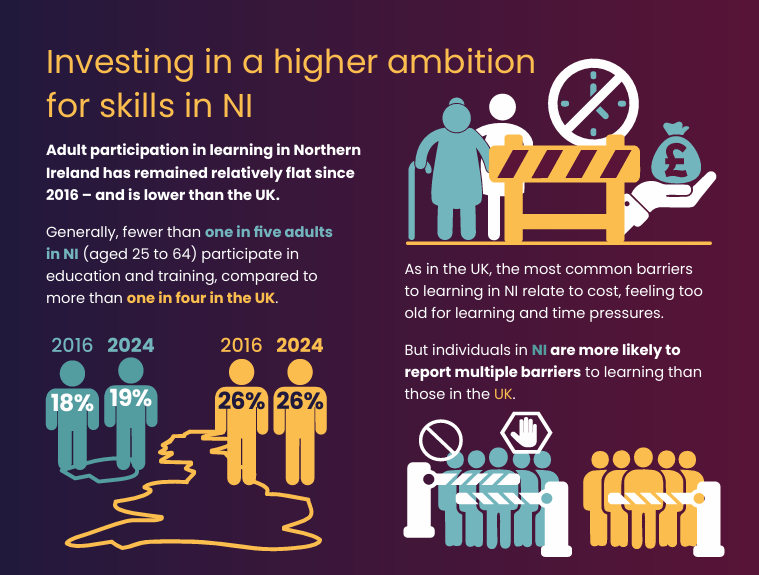
A mixed but improving picture
The report confirms that Northern Ireland is making important progress:
However, significant challenges remain:
This creates a “mixed picture,” where strong growth at higher levels is offset by slower progress elsewhere.
The need for continued investment and ambition
The findings underline the need for sustained action across the skills system. Progress is possible, but it requires long-term commitment, coordinated policy and increased investment.
Key priorities include:
Without this, Northern Ireland risks falling behind as other regions continue to advance.

Reflecting on the report, Martin Flynn, Chief Executive of OCN NI, said:
“This research shows the progress Northern Ireland is making, supported by the Department for the Economy’s commitment to strengthening our skills system. But it also highlights that we cannot afford to stand still. Continued and increased investment is essential if we are to widen access, raise achievement at all levels, and ensure that lifelong learning becomes a reality for everyone. At OCN, we remain committed to developing qualifications that not only support a competitive economy but also foster inclusion, opportunity and resilience across Northern Ireland.”
Looking ahead
This research provides a clear and compelling evidence base to inform future skills policy and investment decisions. It highlights both the opportunity and the urgency facing Northern Ireland.
By embracing a higher ambition for skills, one that prioritises inclusion, progression and lifelong learning, Northern Ireland can build a stronger, fairer and more prosperous future for all.
